You stand under the harsh fluorescent lights of a crowded convention center, gripping a crisp stack of carefully selected documents. Your fingers run over the subtle, woven ridges of 32-pound ivory cotton paper. It feels substantial, like an unspoken promise of competence. You hand it across a fold-out table to a tired recruiter, waiting for that subtle nod of approval as they register the premium weight.
But what happens next rarely matches the fantasy of a mahogany desk and a thoughtful read. That heavy, textured sheet goes into a canvas tote bag, pressed against dozens of others. Hours later, back in a regional human resources office, someone feeds that massive stack into a high-speed automated feed scanner. The machine pulls your future into its rolling plastic grips, trying to translate ink into data.
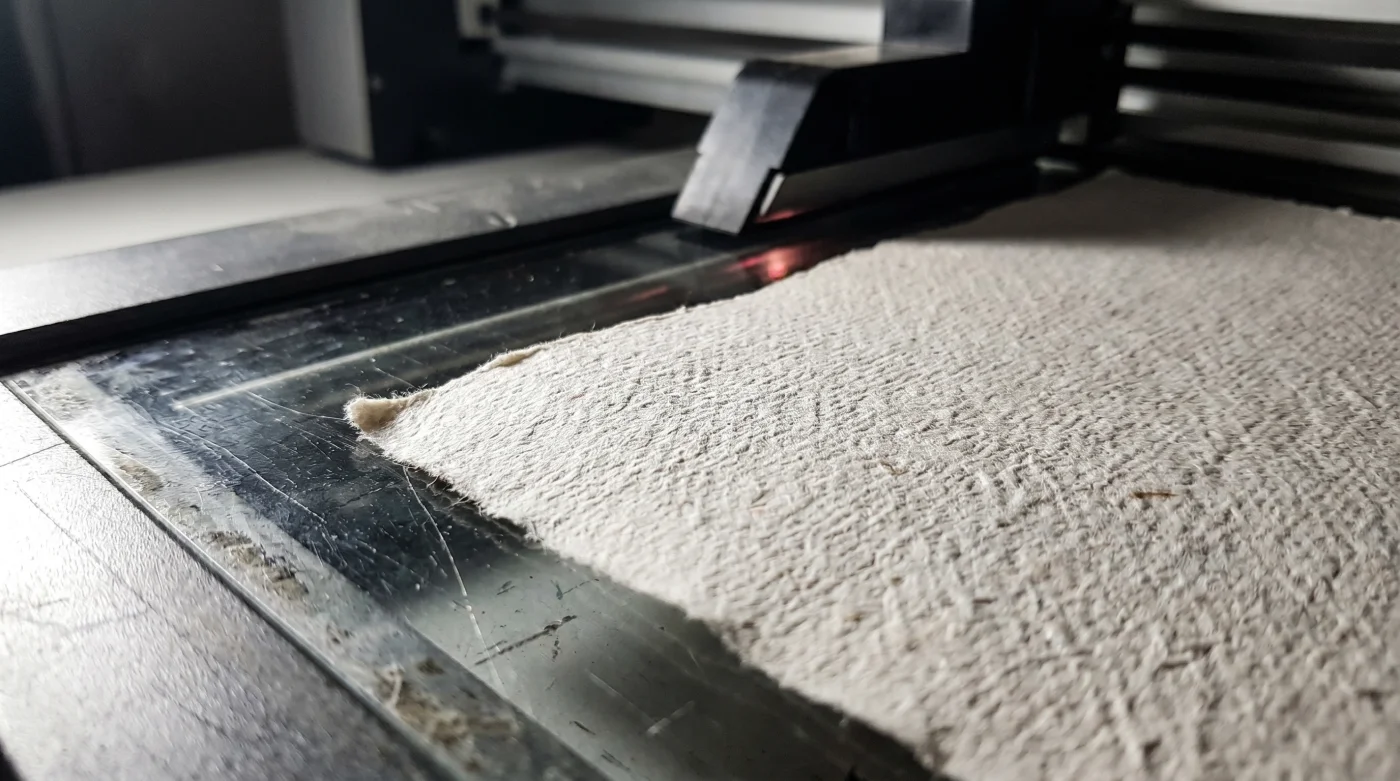
And right there, the woven elegance of your expensive linen blend becomes a catastrophic obstacle. The scanner’s optical character recognition software hits the microscopic valleys of the textured cotton, reads the resulting shadows as random ink splatters, and scrambles your meticulously crafted contact information into unreadable garble.
The Optical Illusion of Authority
We are taught that physical weight equals professional gravitas. You learned to dress the part, give a firm handshake, and hand over a document that practically demands respect through tactile feedback. It makes sense when you view hiring as an intimate, human-to-human exchange.
But modern hiring is a machine-first gateway. Think of the automated applicant tracking system like reading a book through a screen door. If the mesh is warped, the words break apart. The software is not looking for character or nuance; it relies on sharp, high-contrast borders between black toner and a stark white background.
The perspective shift here is slightly jarring: the absolute cheapest, flattest, most basic twenty-pound printer paper is your greatest competitive advantage. By abandoning the vanity of a tactile experience, you guarantee the machine can actually read your name.
The Processing Floor Reality
Marcus Cole, a 42-year-old talent acquisition director for a major Midwest logistics firm, watches this tragedy play out every hiring cycle. After large university job fairs, his team processes over five hundred physical resumes in a single afternoon. People hand him these beautiful, thick, parchment-like documents, but his automated feed scanner turns that visual noise into automatic rejections.
A candidate with ten years of perfect experience gets rejected by the system because the cotton fibers made the letter ‘M’ in their email look like an ‘N’ or a broken bracket. The software just trashes the file, and the human hiring manager never even sees it.
Navigating the Paper Divide
Not every interaction ends at an automated scanner. Understanding when to deploy specific materials requires adjusting your approach based on the room you are standing in. You have to adapt to the environment.
For the Mass Job Fair
If you are dropping your paperwork at a booth where the representative is collecting them in stacks, assume everything is headed for a digital conversion. Your strategy here requires zero-friction digital data transfer. Prioritize high-brightness, flawlessly smooth surfaces. Let the recruiter fold it, stuff it, or spill water on it; as long as the letters scan cleanly later, your job is done.
For the Direct Interview
When you are sitting across a desk from the actual hiring manager, the rules change entirely. Here, the document stays in human hands, so a slight step up in paper weight—perhaps a smooth 24-pound bright white—offers a subtle tactile upgrade without risking digital mistranslation if they decide to scan it later.
For the Creative Hand-off
Designers, architects, and artists often want their leave-behinds to reflect their aesthetic sensibilities. This is a closed-loop scenario where visual impact matters, but caution is still required. If you must use textured or colored stock for a portfolio piece, always staple a perfectly flat, machine-readable cover sheet containing your raw data to the front. You satisfy the algorithm first, then satisfy the eye.
Structuring for the Scanner
Adapting to the machine requires a minimalist approach to your physical materials. You have to strip away the decorative habits and focus entirely on visual clarity. It is about removing the obstacles between your history and the database.
When preparing for an in-person event, build your documents with the scanner’s limitations in mind. Treat the printed page as a temporary vessel rather than a final artifact. Keep the execution completely functional.
- Weight: Stick to 20-pound or 24-pound standard printer paper. Avoid anything labeled cardstock or resume weight, which often jams high-speed feeders.
- Texture: Look for smooth or laser finishes. Avoid linen, laid, cotton, or woven descriptors.
- Color: Use 96+ brightness pure white. Ivory, cream, or gray backgrounds reduce the contrast necessary for precise optical recognition.
- Typography: Utilize clean sans-serif fonts like Arial or Calibri. The tiny feet on serif fonts can blur into textured paper shadows.
Designing for the Silent Reader
There is a profound relief in letting go of the need to impress through physical weight. We spend so much energy trying to communicate our worth through superficial signals—the cut of a suit, the firmness of a handshake, the expensive grain of stationary.
But competence does not need to shout through an embossed sheet of linen. True professional adaptability means recognizing how the current system actually operates, not how we wish it did. By ensuring your history is legible to the quiet, automated gatekeepers, you clear the path for a real human conversation later.
You stop fighting the machine. Instead, you give it exactly what it needs to pass you through the door.
Your resume’s primary job is to be readable to a machine before it ever earns the right to be judged by a human.
| Key Point | Detail | Added Value for the Reader |
|---|---|---|
| Paper Weight | 20lb to 24lb standard stock | Prevents feeder jams in commercial office scanners. |
| Surface Texture | Laser smooth, zero grain | Ensures precise Optical Character Recognition without errors. |
| Brightness | 96 or higher pure white | Creates necessary contrast to prevent shadow-based typos. |
Resume Scanning FAQ
Will a recruiter think I am cheap for using standard paper?
No. They are focused on efficiently moving data; flat paper makes their job easier.Can I use a pale ivory or cream color?
Avoid it. Off-white shades reduce ink contrast, which confuses older optical scanners.What if my industry is highly traditional, like law or finance?
Print on smooth 24-pound bright white. It feels crisp but remains perfectly machine-readable.Do serif fonts scan worse on textured paper?
Yes. The tiny tails on letters blur into the paper grain shadows, scrambling the text.Should I fold my resume at a job fair?
Keep it as flat as possible in a padfolio, but standard paper survives folding better in scanners than stiff cardstock.