The smell of stale coffee and the rustle of heavy, glossy pages define the late-night quiet of a medical library. You sit with the weight of a massive anatomy atlas resting on a wooden desk, trying to force a flat rendering of the brachial plexus into something your mind can use.
You stare at the red and yellow lines, straining to build volume out of two-dimensional ink. It feels like trying to learn the physical exhaustion of a mountain range by staring at a topological map.
But the modern operating room does not care about your ability to memorize a flat schematic. The tension between the static page and the beating, layered reality of human tissue is where dangerous hesitation lives.
Spatial computing is rewriting the rules of surgical preparation from the ground up. The static textbook is rapidly giving way to a new reality where you do not just read about anatomy—you step entirely inside it.
Escaping the Flatland of Medical Training
Think of the human body not as a blueprint, but as a dense, living terrarium. For generations, you were expected to memorize the blueprint and somehow guess the physical depth when the time came to make an incision.
The old flaw in medical education was relying on these flat diagrams to teach a spatial discipline. You spent hours compensating for flat paper, taking on a cognitive load that drained your mental energy before the scalpel even touched skin.
The perspective shift happens when you stop trying to translate 2D to 3D and simply start working in volume. The upcoming 2026 residency baseline is no longer about how well you memorize a book; it is about your fluency in navigating immersive, spatial environments.
- Welding torches dominate trade school search traffic this current quarter
- Safety harnesses face massive supply shortages amid renewable energy hiring
- Ring lights destroy webcam focus during virtual corporate job interviews
- Standing desks create severe lumbar compression without anti-fatigue floor mats
- Noise-canceling headphones degrade auditory awareness during critical remote team meetings
Take Dr. Elena Rostova, a 34-year-old attending neurosurgeon and residency director in Chicago. She noticed her first-year residents consistently misjudged the angle of approach for ventricular drains because their mental models were built entirely on textbook cross-sections. When she mandated VR spatial training for her incoming cohort, she saw a dramatic drop in spatial hesitation in the OR. ‘We stopped teaching them to read maps,’ she notes, ‘and started dropping them directly into the terrain.’
The 2026 Standard: Adjustment Layers for Your Career
Adopting VR headsets as a primary study tool is not a monolithic process. Your approach depends entirely on where you currently stand in your medical education.
For the First-Year Anatomist: You are building your foundational vocabulary. Your goal is to replace rote visual memorization with spatial intuition. Use VR to physically walk around the cardiovascular system, noting how the aorta curves in relation to the pulmonary artery from behind.
For the Clinical Clerk: You already know the names of the structures. Now, you need to understand procedural pathways and tight clearances. Your focus shifts to simulation, rehearsing the muscle memory of laparoscopic ports before you step into an actual surgical suite.
For the Residency Applicant: The expectations of the matching process have quietly shifted. Programs are looking for candidates who require less baseline correction when scrubbing in. Listing VR procedural proficiency on your application is rapidly becoming the unspoken requirement for highly competitive surgical slots.
Cultivating Spatial Fluency
Transitioning from textbooks to spatial computing requires a deliberate, mindful approach to avoid cognitive fatigue. You cannot treat a VR session like a marathon library night.
Limit your immersion blocks strictly to avoid simulator sickness and mental exhaustion. Treat the headset as a high-intensity training tool, rather than a casual reference book you can leave open on your lap.
Follow a minimalist routine to integrate this into your study schedule effectively:
- Keep sessions under 45 minutes to maintain sharp spatial memory and avoid visual strain.
- Stand up and move physically around the virtual model; do not use the controller joystick to rotate it.
- Cross-reference your VR findings with traditional MRI scans to build a bridge between clinical data and anatomical reality.
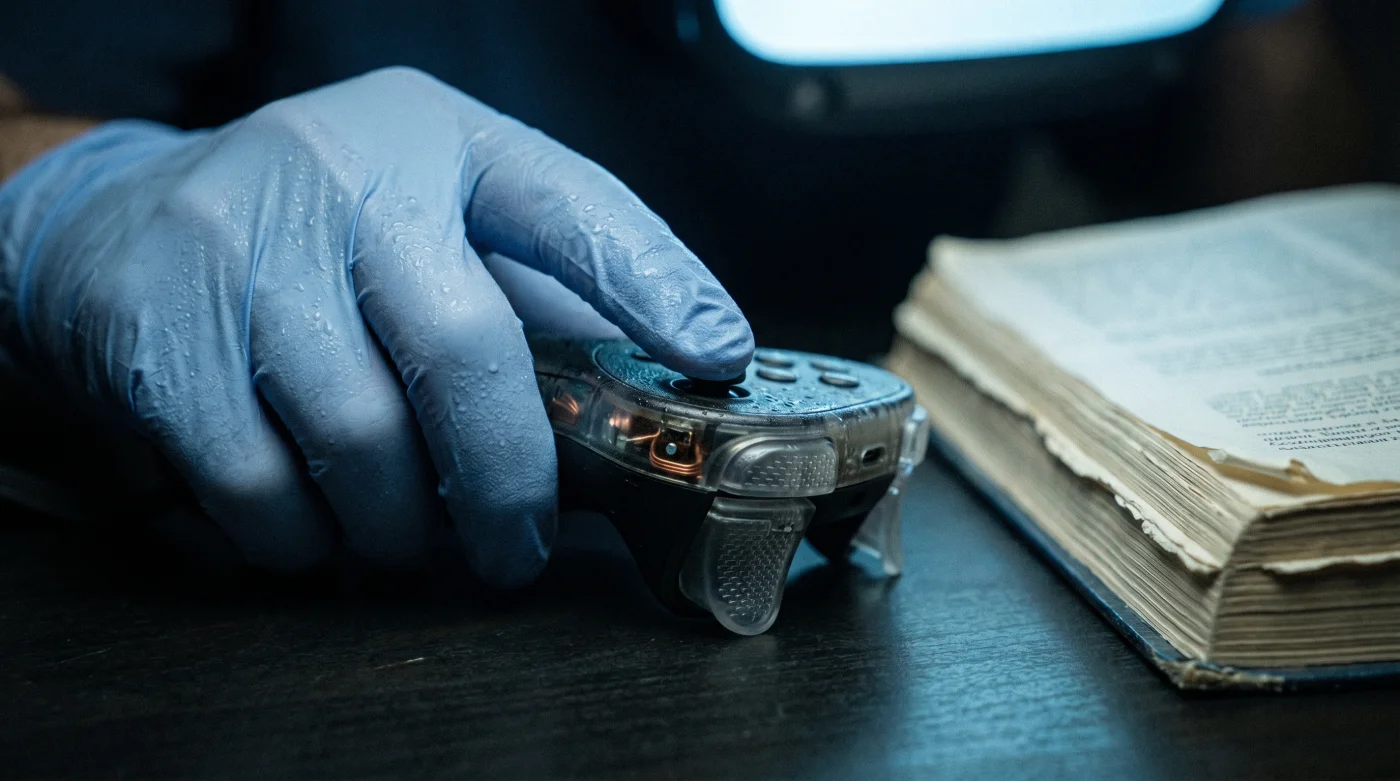
The Tactical Toolkit for this transition includes a standalone VR headset with minimum 4K resolution, a dedicated 6×6 foot clearing in your room, and a weighted haptic controller to anchor your physical movements in space.
The Quiet Confidence of True Depth
Moving beyond the two-dimensional page gives you something a textbook never could: the quiet confidence of physical familiarity. When you finally scrub in, the anatomy will not feel like a sudden surprise.
You will recognize the terrain because your hands and eyes remember being there before. The anxiety of the unknown gives way to the calm precision of a practiced movement.
Mastering this spatial computing standard is not just about padding a residency application for 2026. It is about fundamentally respecting the complex, three-dimensional reality of the patients who will eventually trust you with their lives.
The moment you remove the translation layer between a flat image and a physical body, hesitation disappears from the hands.
| Key Point | Detail | Added Value for the Reader |
|---|---|---|
| Spatial Baseline | VR is replacing 2D textbooks in core curriculums. | Reduces cognitive load by teaching directly in 3D volume. |
| 2026 Residency Standard | Immersive tech proficiency is expected for surgical matches. | Provides a clear competitive edge for upcoming application cycles. |
| Mindful Immersion | Short, active VR sessions beat long, passive reading. | Prevents fatigue while building superior spatial memory. |
Frequently Asked Questions
Do I need an expensive headset to start learning spatial anatomy? No, current consumer-grade standalone headsets with 4K resolution are more than capable of running top-tier medical software without needing a high-end PC.
Will VR replace cadaver labs completely? Not entirely. VR builds spatial mapping and procedural memory, while cadaver labs teach tissue texture and physical variation.
How do I list VR proficiency on a residency application? Detail the specific software used, the procedural modules completed, and the total logged hours under your continuing education or skills section.
Does spatial computing cause motion sickness during study? It can, which is why you must limit sessions to 45 minutes and physically walk around the models rather than using artificial joystick locomotion.
Can I use this for non-surgical specialties? Absolutely. Understanding precise 3D anatomy improves diagnostic imaging interpretation for radiology, internal medicine, and emergency procedures.